


NATIVE MATERIALS FOR LASTING LANDSCAPES
Restoration Plant Materials
If you’re a professional landscaper or reclamation specialist, you know the drill: the project looks great on day one, but if the plants aren’t "restoration-ready," you’re looking at costly replants and a damaged reputation by year two.
We offer a diverse selection of species critical to habitat and ecological restoration in a variety of sizes.
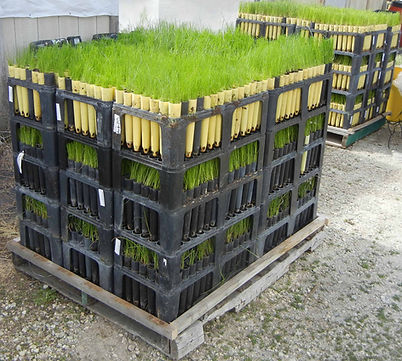
Rooted in Resilience. Grown for Restoration.


Species Highlights
Big Sagebrush (Artemisia tridentata):
A foundational shrub for a vast expanse of the Western US ecosystem, providing shelter and national resources for wildlife.
Choose from the three subspecies based on your area.
Rocky Mountain Juniper (Juniperus scopulorum):
Another key sagebrush-steppe shrub species that provides habitat for wildlife.
Antelope Bitterbrush (Purshia tridentata):
A shrub critical for big game winter range - it is high protein and drought-tolerant.
Rubber Rabbitbrush (Ericameria nauseosa):
A fast-growing, pioneer species for disturbed soils and erosion control.


Woody Shrubs
The Backbone of Restoration
Riparian Shrubs
Cottonwoods (Populus)
Keystone species in river and streambank habitats that stabilize riverbanks and water temperatures.
Willows (Salix)
Biodiversity pioneers that reduce soil erosion and provide critical habitat for wildlife.
Other Shrubs
Serviceberry (Amelanchier alnifolia)
Chokecherry (Prunus virginiana)
Red-osier Dogwood (Cornus sericea)
and more...
Wetland Graminoids
Sedges (Carex)
Crucial for rebuilding ecosystems through bank stabilization, biofiltration, and providing habitat and food for wildlife
Rushes (Juncus)
Dense root systems make rushes another crucial wetland species for restoration.
and others...
Riparian & Wetland Species
Stabilizing our Waterways


Conifers
Full to Midscale Reforestation


Species Highlights
Limber Pine (Pinus flexus)
Our tried and true conifer, native throughout the Western US
Ponderosa Pine (Pinus ponderosa)
We grow Ponderosa from seed collected from East and West of the Continental Divide to align with projects with ecotypic specialization
Douglas-fir (Pseudotsuga menziesii):
A classic conifer used in many applications
Pinyon Pine (Pinus edulis):
Native to the four corners, grown on contract only
Seed Services
Custom seed and cuttings harvest services available

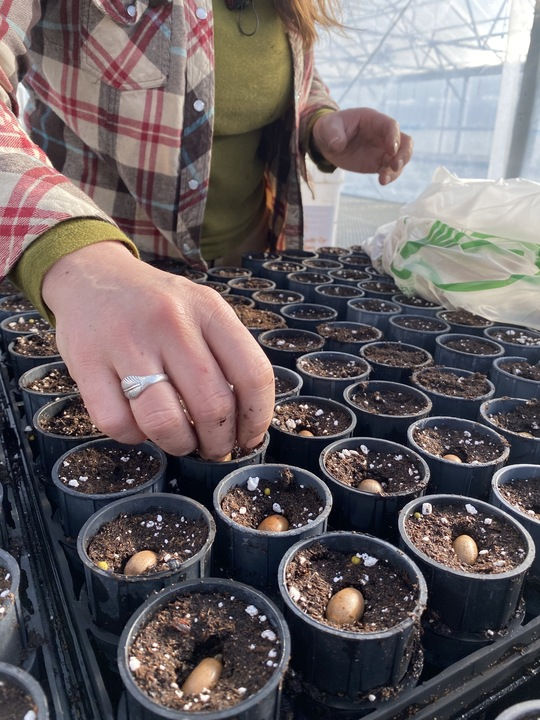

Contact the Great Bear Native Plants Sales Team for more information or a quote for your upcoming restoration project.
We know the use of site-specific and ecotypic seed is essential in many restoration applications - we're here to make sure you're getting the product you need for project success.
We are proud to offer:
- Custom seed collection
- Cleaning of customer-provided seed
- Storage of custom seed
- Sourcing and collection of ecotypic riparian cuttings
Bids are reviewed year round. To secure space in our greenhouse, we suggest reaching out to our team six or more months before the project planting date.

READY TO GROW?
Ready to order plants for your project?
Email Claire or Aimee or call to discuss species lists, quantities, and delivery windows:
aimee@greatbearnativeplants.com
For contracts, apply on our Contract Grow page.
Restoration Material FAQs
What categories of project materials do you provide on the Restoration Plant Materials page?
We provide plant materials broken down into three specific categories: Reclamation (including mines, revegetation, natural gas, renewable energy, and difficult environments), Mitigation (including Army Corps of Engineers projects, wetlands, native grass, and fast-growing plants to support credit release), and Restoration (including bank riparian, upland habitats, and sagebrush steppe).
What makes your native plants "restoration-ready" for difficult reclamation sites?
Our plants feature built-in resilience because we do not coddle them. They are actively hardened to survive the wind, the cold, and the unpredictability of intermountain weather to ensure high survival rates and prevent costly replants for professional landscapers and reclamation specialists.
How do your containers support successful root development in challenging environments?
We utilize engineered root systems by growing our stock in specialized Ray Leach "Super Cell" and Deepot™ containers. This method encourages a healthy root-to-shoot ratio that is critical for successful outplanting and establishment.
Do you offer site-specific or ecotypic plant materials to ensure genetic integrity?
Yes, our plants are exclusively grown from native seed sources. We also offer site-specific seed collection and custom plant materials to align with your project's specific ecotype, such as growing Ponderosa Pine from seed collected specifically from either East or West of the Continental Divide.
What types of species do you offer for riparian bank and waterway stabilization?
We grow keystone riparian species that stabilize riverbanks, reduce soil erosion, and regulate water temperatures, including Cottonwoods, Willows, Serviceberry, Chokecherry, and Red-osier Dogwood.