
Riparian Forest Restoration at Lee Metcalf National Wildlife Refuge

Trout Unlimited (TU) began a project in the fall of 2025 to restore a ½ mile stretch of North Burnt Fork Creek in the Lee Metcalf National Wildlife Refuge in Stevensville, MT.
The goal of the project was to restore the stretch of creek to a native habitat of multi-story riparian forest. Prior to restoration, the area had been overgrown by reed canary grass.
In 2024, TU and partners stripped off the grass and laid down weed fabric. Plant material grown by Great Bear was planted and fenced in to protect the new saplings from deer browsing. They hoped that larger, protected plant material would have a strong start and eventually grow quickly and tall enough to shade out much of the reed canary grass, resulting in a strong riparian forest.
Site preparation and planting were completed in 2024, but TU will continue to monitor and maintain the area along North Burnt Fork Creek for the long-term.

TU planted over 500 plants, all provided by Great Bear. Willow and Cottonwoods were some favorites for their quick growth, but project manager Christine Brissette made sure to mix in some of her favorites - Chokecherry and Woods Rose, both known for spreading and bank stabilization.
A special aspect of this project is that all of the planting, fencing, and weed mat were completed by volunteers - an unusual feat for a project of this scale. Trout Unlimited reports that they have over 1,000 volunteer hours logged from Trapper Peak Job Crops, Bitterroot Chapter of Trout Unlimited, students from Hamilton and Corvallis, and members of the general public.
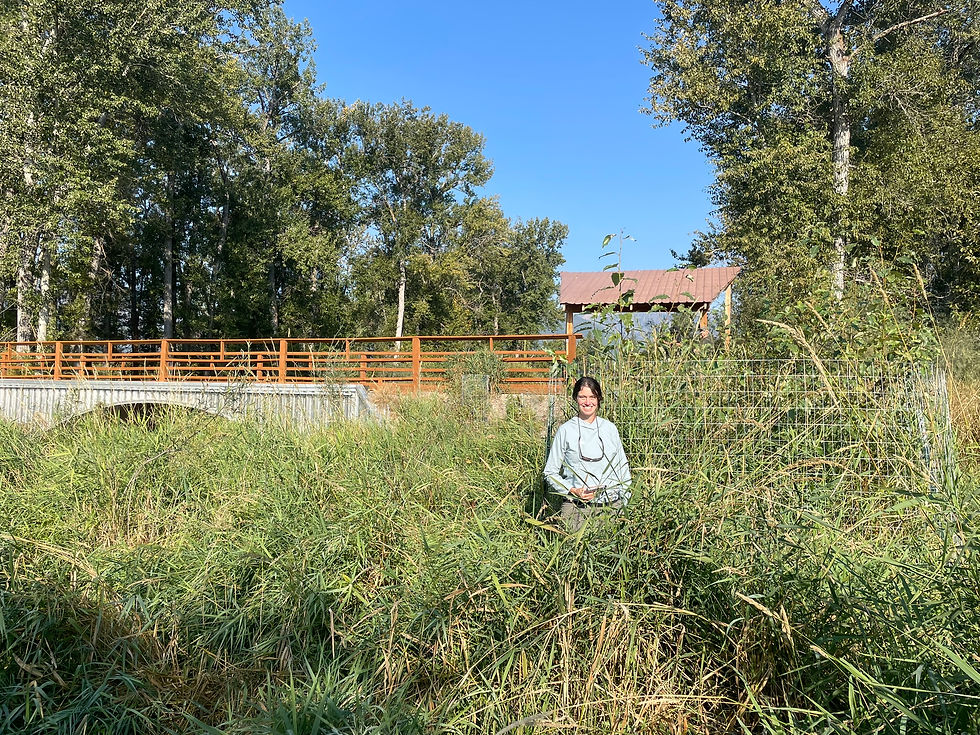
In providing a project update, Christine shared that after 2 season of growth, many of the plants are already taller than her! While the reed canary grass has made a comeback, the weed mat is still doing its job and the plants are all growing very well.
Would you like to check out this project? Find this restored reach of North Fork Burnt Creek on the Riparian Way Trail (beginning at Metcalf National Recreation Trail) in the Lee Metcalf National Wildlife Refuge.


Comments